

We hear about outcomes vs outputs at lot in business and in impact management. It’s important to know the difference so you can show that you, as a charity or organisation, do what you say you do, you can use these results to show your funders that their financial support has helped and made a difference, and this can encourage repeat donations or new donations. So, what’s the difference and which do we need to focus on?
Output
Your outputs are the activities, plans and projects you are planning to run, are currently running or have run in the past. They are deliverables, they are your actions towards your goal, they are details activities, services and products. For example, if your goal is to reduce the number of people going hungry in your community you may open a foodbank or community fridge. This is your output. You can measure how many people come to your foodbank but that is not the same as working out how these people were helped and the impact it had on their lives. Often, in our practice at The Charity Spark, we refer to outputs and output indicators as ‘bums on seats’ data. It tells us that you are doing something, but it doesn’t tell us the difference you are making. Bluntly, you could see 150 people through your doors but, if your project isn’t hitting the mark, you may make no difference whatsoever. So how do we tell that an output is having effect? That is where outcomes come in.
“Outcomes should reflect the changes that are most important to your organisation.”
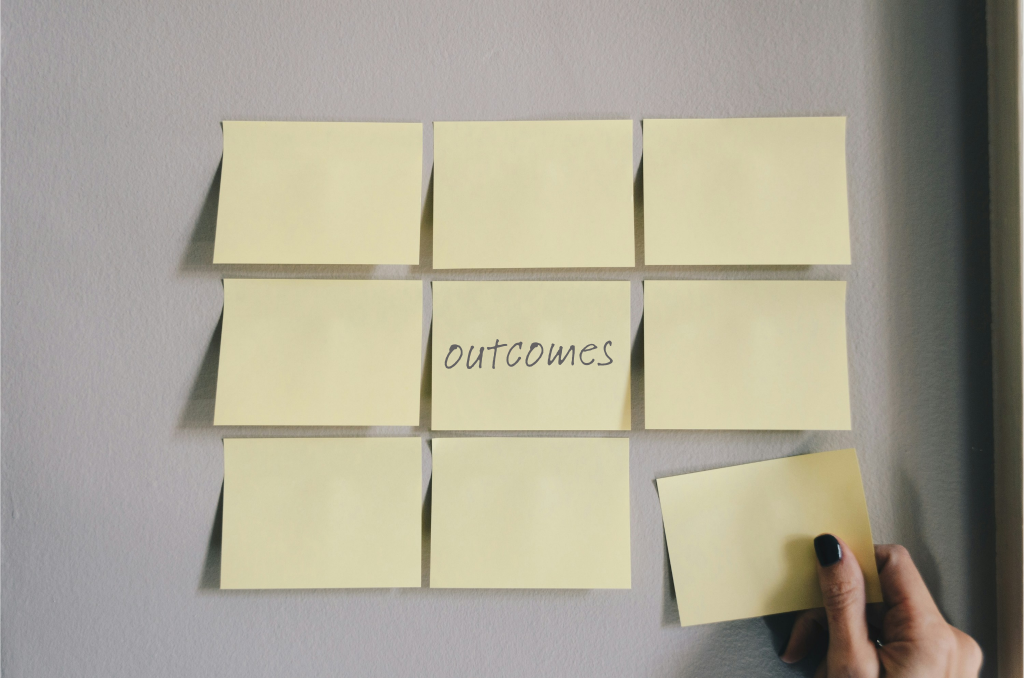
Outcomes
Your outcomes are the specific changes that happen for your beneficiaries, they are benefits, learning or other effects that come as a direct result of your work. When you are writing your outcomes you should be thinking about change (using words such as improved, increased, maintained, reduced). They need to be realistic and should follow a logical sequence based on the project you have developed. We are not looking for broad data such as the number of people reached – this is output data and doesn’t tell us if you are helping these people. If we use the example above, we don’t want to measure how many people visit our foodbanks, we want to measure the impact it had on them. We may look for outcomes such as the reduction in worry over food bills or the increased wellbeing that comes with regular meals. These outcomes should reflect the changes that are the most important to your organisation, charity or beneficiaries.

Once you have a set of outcomes you can define what the indicators will be that you will use to measure them. For example, if you have an outcome of ‘community pantry users will have increased food security’ then an outcome indicator may be ‘number of times community pantry users have accessed a food bank in the last six months’.
Outcomes are important because we are able to measure them and check that our projects are really doing what they say we do.
We can “generate a compelling case for further support to keep the project going”
When we can evidence that something does what we say it does, we a) know that we are making a difference in the lives of those that need us, and b) generate a compelling case for further support to keep the project going.
Importantly, we need to ensure we measure outcomes regularly enough that we can tell if something isn’t working as effectively as we had hoped either. This allows tweaks and changes to be made quickly so that the remaining project term sees improved outcomes rather than waiting until the end of a project to realise that perhaps it could have been more effective.
Need help working out your outputs from your outcomes? Get in touch!
