

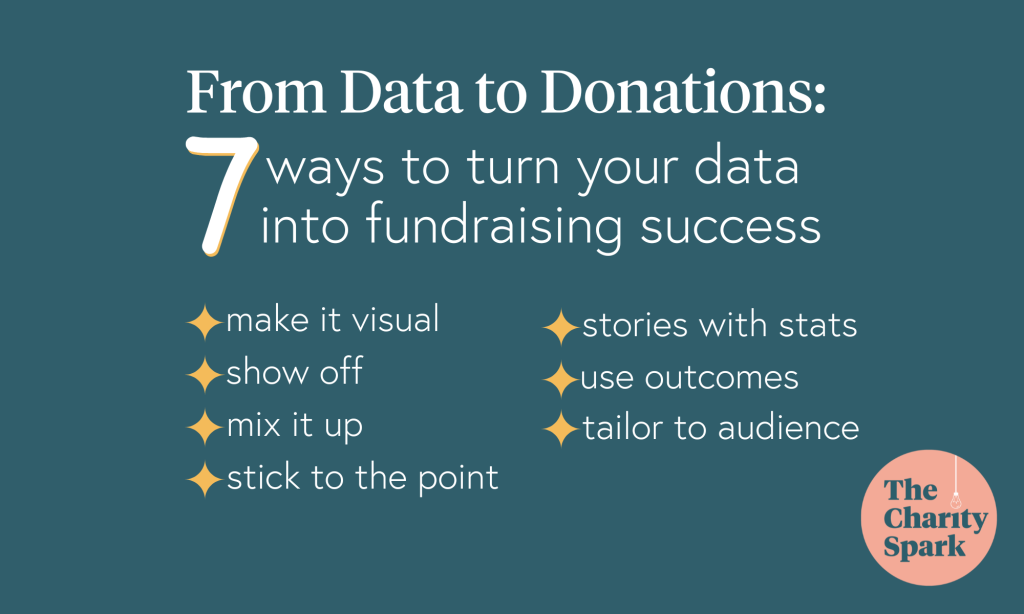
So, you’ve done a great evaluation project, you’ve got data, you’ve got evidence your charity does what it says it does.
Now what?
How can you use your data and how can it benefit your fundraising? Let’s look at ways you can use the data to boost your fundraising success.
- Make it visual. Use your brand colours and logos to present key figures in an easy-to-read way, this reinforces your charity or organisation identity and increases the chances of you being remembered. You can highlight your impact but creating visual snapshots of data, think infographics and charts. Make sure these visuals are accessible (check the contrast of the colours you use, the font size etc) and mobile-friendly. That way people can share your data and get people talking.
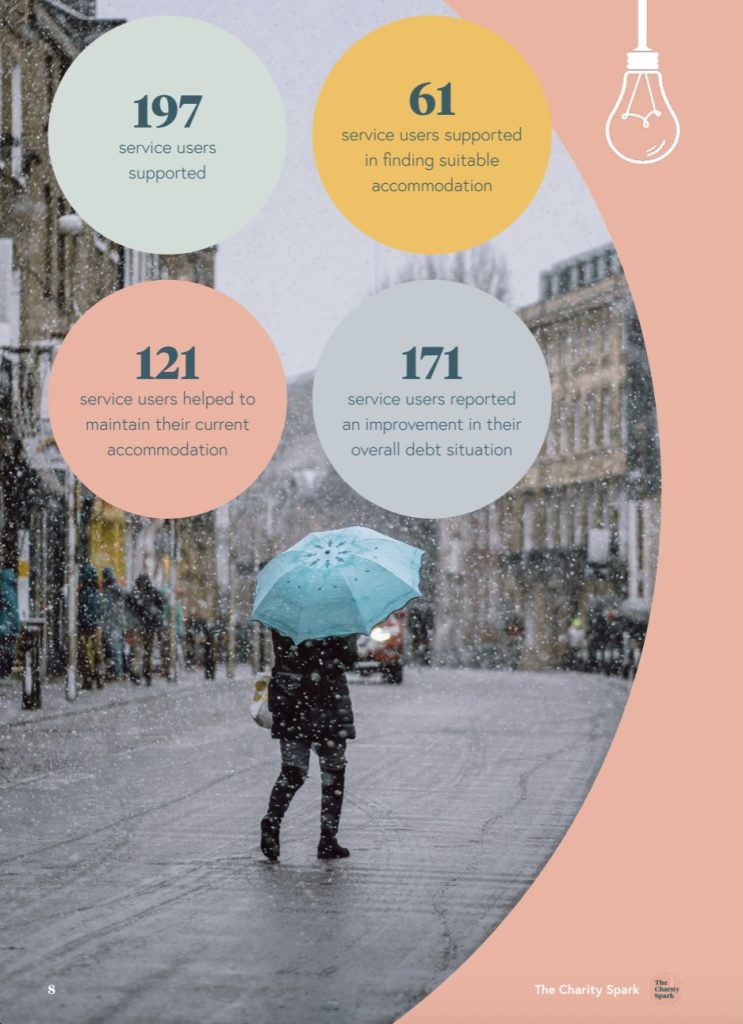
- Pair stories with stats. When we combine personal beneficiary stories with the relevant data, we develop credibility and connect with people (and potential funders) in an emotional, real way. Suddenly the stats aren’t just numbers anymore, they’re human. Keep the stories short and sweet, use quotes from beneficiaries, staff and volunteers where suitable. Emotional connection alongside statistics and facts builds trust and creates impact.
- Show off your success. Have a look at previous funding applications and think about the goals you have since met. Showcase these successes using the evaluation data and outcomes you have gathered. But be transparent, if something didn’t quite work out the way you thought it would explain why and what was learned from that. Authenticity builds trust.
- Use outcomes with data. Use ‘so what’ data not just ‘bums on seats’ data. Focus on meaningful changes and outcomes from your projects, e.g. 85% of beneficiaries reported increased food security. Show off your tangible results such as before and after comparisons where possible and suitable. E.g. before our programme started 45% of the group felt confident to join social groups, now 79% of the same group say their confidence has grown.

- Mix it up. Try to present your data in interesting and varied ways, use tables, graphs, bullet points etc to keep your reader (and potential funder) engaged and interested. Consider using interactive elements where possible for digital reports and applications– clickable graphs for example.
- Tailor your information for different audiences. Pick and choose the most relevant information to share with funders, individual donors and corporate partners. Find out what their aims and priorities are and share information and data that is relevant. Keep your potential funders interested. Use more emotional storytelling for individuals and small funders but think about sharing more Return of Investment data with large funders and corporates. Know your audience.
- Stick to the point. Whoever you are sharing this data with, keep it concise and clear. Avoid jargon and explain what the data means. Focus on key takeaways and don’t overwhelm the reader with too much detail. Your data is important and it can increase your fundraising success but no one wants to be overwhelmed with stats and figures that don’t mean anything to them.
For more support with project evaluation and fundraising get in touch today hello@thecharityspark.co.uk
We would love to chat with you about your projects.
