


It might feel really overwhelming to sit down and plan a fundraising campaign, it requires more than just a good cause, a big dream and a heartfelt message. You need strategy, goals and a good understanding of your audience. But don’t panic. We’re here to help, in this blog we’ll outline the 10 essential steps to creating a successful fundraising campaign.
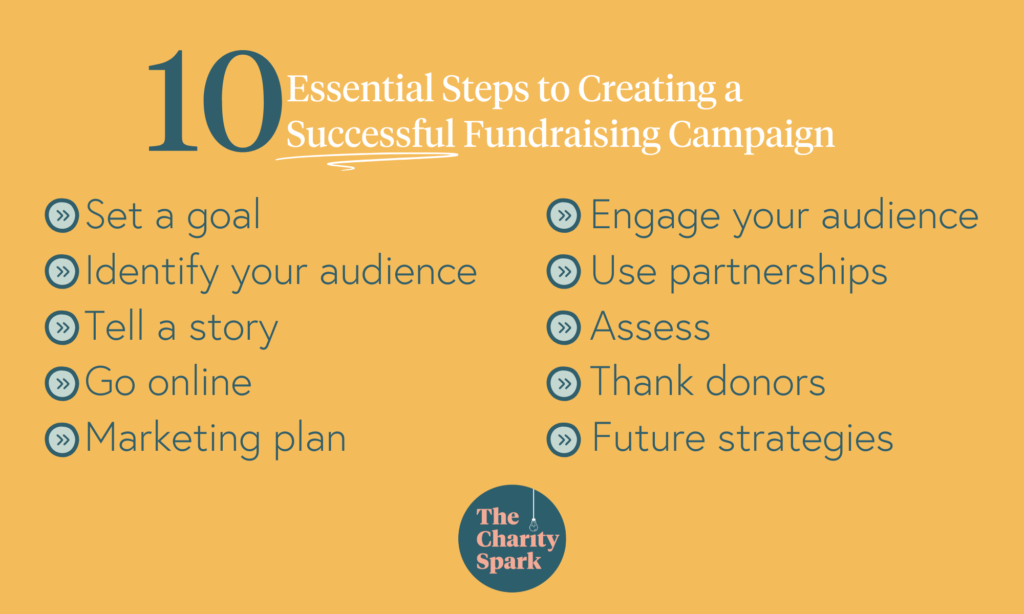
1. Set a goal. This needs to be well-defined and inspiring to grab people’s imaginations and enthusiasm but it also needs to be SMART.
- Specific: give your goal as much detail as possible, define your aims to make sure they align with both your organisation and your stakeholders plans. For example, if one of your goals is to sell tickets to an event, specify how many tickets you want to sell.
- Measurable: being able to measure your goals keeps you on track. Keep a record of how many tickets you sell via different methods, this gives you more information to tweak where you are advertising the project the most.
- Attainable: be challenging but realistic, look at past projects or fundraisers and see what has already been achieved. If you have been able to sell plenty of tickets to previous events this can be encouraging for your team to know when they are selling for your current event.
- Relevant: tie your fundraising goal back to your organisation’s overall aim. Tell your audience what their contribution will fund, what can your organisation do with £10, £50 or £100? Make sure everything is aligned with your purpose.
- Time-based: set a specific timeframe for your fundraising goal, this gives urgency and purpose and keeps the team on track.
2. Identify your audience. Who do you want to engage in your fundraiser? Where will you find these people who identify enough with your purpose and aims to want to donate or get involved? Look at your current donors and stakeholders and think about why they have chosen to get involved and what motivates them to do so. Consider conducting some market research through surveys or focus groups to find out more about your current and potential donors.
3. Tell a story. We’ve explained before about the importance of having a compelling case for support and we’ve also written about how to use it once you have one. But we’ll say it again: telling a good story is so important. It makes your work relatable and can communicate your charity’s mission in an effective way. You can use a range of media to do this, written word, videos, photos and case studies all work great. Think about what you would want to know before donating.
4. Use an online platform or website. People like things to be easy and straightforward and using an online donation platform, or plugin on your website, makes donating so quick and easy. With just a few clicks people are able to donate to your cause and then get on with their day.
5. Create a marketing plan. How are you going to get the word out about your fundraising campaign? It’s so easy these days to use different methods to reach as many people as possible, you can even use schedulers to post to social media so that you don’t have to remember to login and do it, just set it all up in one go. Consider using emails, social media and press releases for your marketing. These are all great (and purse-string-friendly) ways to spread the word. We live in a visual world, make sure your marketing is all visually appealing and easy to access.
6. Engage your audience. How can you engage your audience in your campaign? People love to feel involved. It can be really fun to launch your campaign with an event, and it’s also a great way to get people reaching into their pockets. Think about events that would appeal to your audience, for example, a fun-day, quiz night or silent auction. Make sure you give your donors (and potential donors) regular updates and think about whether the use of incentives or rewards could be useful.
7. Partnerships. It can be really useful to partner up with a business or an on-brand social media personality to spread the word about your fundraising campaign. They can share info and updates on their own social media or email newsletters to help you reach further afield to even more potential donors. You may also find that they want to make donations themselves.
8. Assess the campaign. Make sure you take the time to regularly assess how your campaign is going. Are there any tweaks or adjustments that could be made to improve things? Think about what is working well and what is perhaps not working so well.
9. Thank your donors. Once your campaign is over make an effort to thank your donors and give updates on how the campaign went and what you will be able to do with the money raised. Let your donors know their contribution is appreciated no matter the size of it.
10. Use your campaign for future strategy and as a wider audience-building exercise to give your organisation even more long-term benefits for future campaigns or even for growing your volunteer base.
We know that sometimes this stuff doesn’t come easy, and we would love to hear from you if you want to chat about creating a fundraising campaign together. Get in touch today: hello@thecharityspark.co.uk
