

What is a trustee?
Charity trustees are a group of people who have responsibility for a charity and its running. They manage, govern and control the charity, they work together to make decisions about the charity, its policies, objectives and strategies. They are effectively the highest level management team or committee; they may also be known governors or board members. Trustees can use their skills and experience to help the charity to run efficiently.
Who is eligible to be a trustee?
To be a trustee for a charity that is a company or a charitable incorporated organisation (CIO), you must be at least 16 years of age, or at least 18 years of age to be a trustee for any other sort of charity.
Each charity will have their own governing document that lays out guidelines, procedures and restrictions that must be followed to appoint a new trustee.
There are some reasons that would mean you are disqualified from being a trustee (unless otherwise authorised by the Charity Commission). These include:
- Being bankrupt or having an individual voluntary arrangement (IVA)
- Having an unspent conviction for certain offences (including any tat involve dishonesty or deception)
- Being on the sex offenders’ register.
There are further restrictions for charities that work with children or at-risk adults. You can read more on disqualification on the government website.

What are the responsibilities of a trustee?
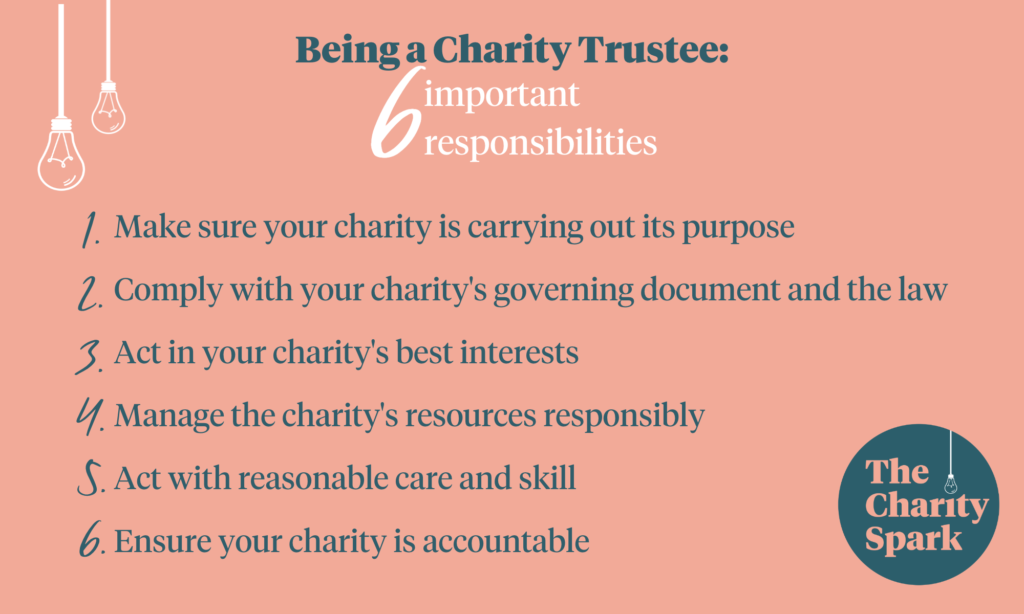
There are 6 main duties that a trustee would have responsibility for. These are:
- Ensure the charity is carrying out its purpose for public benefit and no other purpose. This includes ensuring that you understand the purpose of the charity, planning what your charity will do and what you want it to achieve, being able to explain how the charity’s activities with further or support its purpose and to understand how the charity benefits the pubic.
- Always comply with your charity’s governing document and the law. You must find out what the legal requirements are that apply to your charity and take appropriate advice when needed. Registered charities must also keep their details up to date.
- Always act in your charity’s best interest by doing what you and your co-trustees decided will be best to enable the charity to carry out its purpose. You should do this by making balanced and informed decisions and thinking about the long term as well as the short term. Avoid conflict between the charity’s purpose and your own beliefs and loyalty to any person or body. Trustees should always declare any conflict of interest – this may be trusteeships of other organisations, involvement in a profit-making company or political influence. You should be certain to not receive any benefit from the charity unless it is authorised and clearly in the charity’s interests.
- Take care to manage your charity’s resources in a responsible, reasonable and honest way. You and your co-trustees must make sure the charity’s assets are only used to support the charity to carry out its purpose and not take inappropriate risks with the assets or reputation of the charity. Always take special care when investing or borrowing money and comply with any restrictions on spending funds.
- Act with reasonable care and skill, using your experience and taking appropriate advice before making any decisions. Make sure that you can dedicate enough time, thought and energy to being a trustee. It’s an important role.
- Ensure that your charity is always accountable and complies with statutory accounting and reporting requirements. Keep evidence that can show that the charity is complying with the law, is well run and effective. Work to guarantee accountability to members and as well as within the charity.
How do I become a trustee?
Now you understand the responsibilities of a trustee it may be something you would like to consider doing. There are various ways in which you may find yourself becoming a trustee, below are some of the places you may find a trustee role advertised:
- LinkedIn – looking at pages that are specifically connected to any charities you are interested in is a good place to start, or reaching out and making connections with current trustees
- Guardian Jobs
- Charity Jobs
- Get on Board – an organisation specially run to find new trustees for charities
- Charity-specific recruiters such as Charisma Recruitment
Being a trustee is a rewarding and meaningful voluntary role, it is something to be enjoyed and treasured. Enjoy!
Read our previous blog Building a Diverse Trustee Board: The Essentials
