

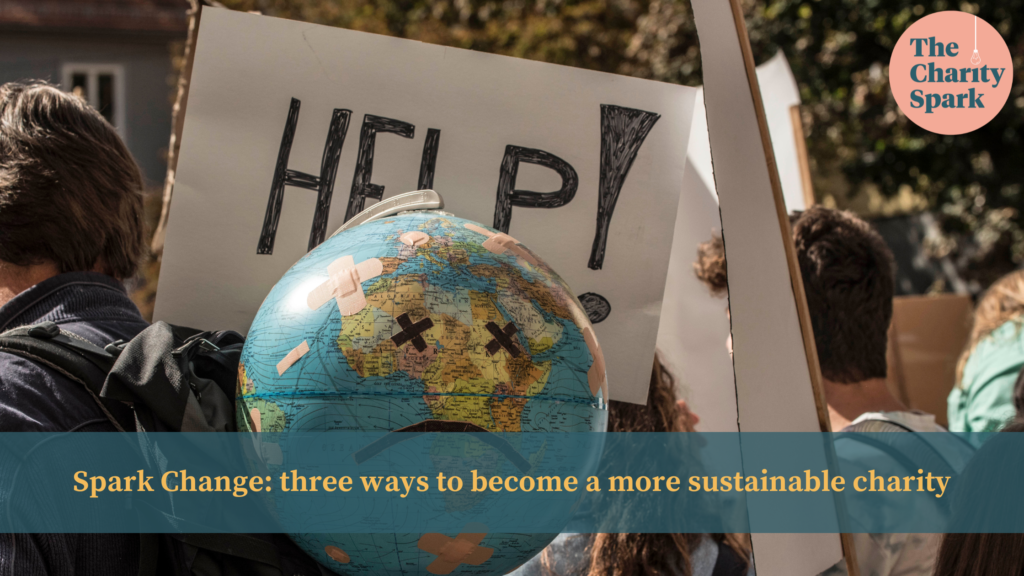
We’re seeing more discussion than ever before around sustainable business, B Corp businesses and even regenerative business. However, we are yet to see quite the same groundswell amongst charities and non-profit organisations.
Many of whom already have sustainable practice and environmental reporting already in place but the large majority do not.
Are you looking to help your own organisation become more sustainable? Whilst there are many ideas that could be shared, here are three key ways you can step into being a more sustainable organisation whilst also juggling staff efficiency, best practice and cost.
- Reduce giveaways and single-use collateral
Historically, charities have produced giveaways by the sackload to reward and motivate loyal donors and supporters. Either given away for free or for a small donation, these types of branded collateral can be easily tossed aside due to their mass produced, low value nature. We encourage charities to remove single-use plastic from their events (think balloons and ‘clappers’), reduce paper waste and consider the necessity of other giveaways. If you can reduce the volume you buy in, we’ll naturally begin to see a reduction in what ends up in landfill. Speak with your supporters about how else you could motivate them, without a physical fundraising pack. - Go virtual
Over COVID we saw events pivot to be virtual fundraisers. Many charities are keeping virtual events within their fundraising calendar. These have so many benefits – increased geographical reach, improved accessibility and, importantly, reduced environmental footprint. Consider off-setting the carbon impact of face to face events, whilst assessing the real need for an event to be held in person at all. - Engage your staff
We often think about how our fundraising practices can be more environmentally friendly but what about our day to day running of the organisation? Engaging staff with your ambitions to reduce your overall footprint as a family and become more regenerative, you may be surprised by the level of personal investment. Does your organisation have environmental policies that cover your charity headquarters? Can you switch to using renewable energy? Do you encourage staff to use modes of transport apart from personal cars? How can waste be recycled more efficiently? Try establishing a environmental and sustainability staff and trustee committee to look at ways that the organisation can contribute to halting climate change.
Bonus tip! You didn’t think we would forget to mention a good bit of data did you? - Measure it
How do you know you are making improvements? By measuring it. Baseline your current carbon footprint, quantify the different types of waste you produce (recycling, food, landfill), make a note of your energy use. Set targets that identify the priorities you have and aims to reduce your overall impact. Then report on it, this will further engage staff and external stakeholders in your aim to become a more sustainable, environmentally positive organisation.
We’d love to know what you are doing to improve your organisation’s footprint, let us know over on Linkedin!
